 Fraunhofer Institute for Microstructure of Materials and Systems IMWS
Lightweight construction is crucial for aviation. In the "STair" project, Diehl Aviation, Ensinger, ThermHex, and the Fraunhofer Institute for Microstructure of Materials and Systems IMWS are developing new thermoplastic lightweight components for aircraft cabins that can be processed more quickly and are significantly more environmentally friendly.
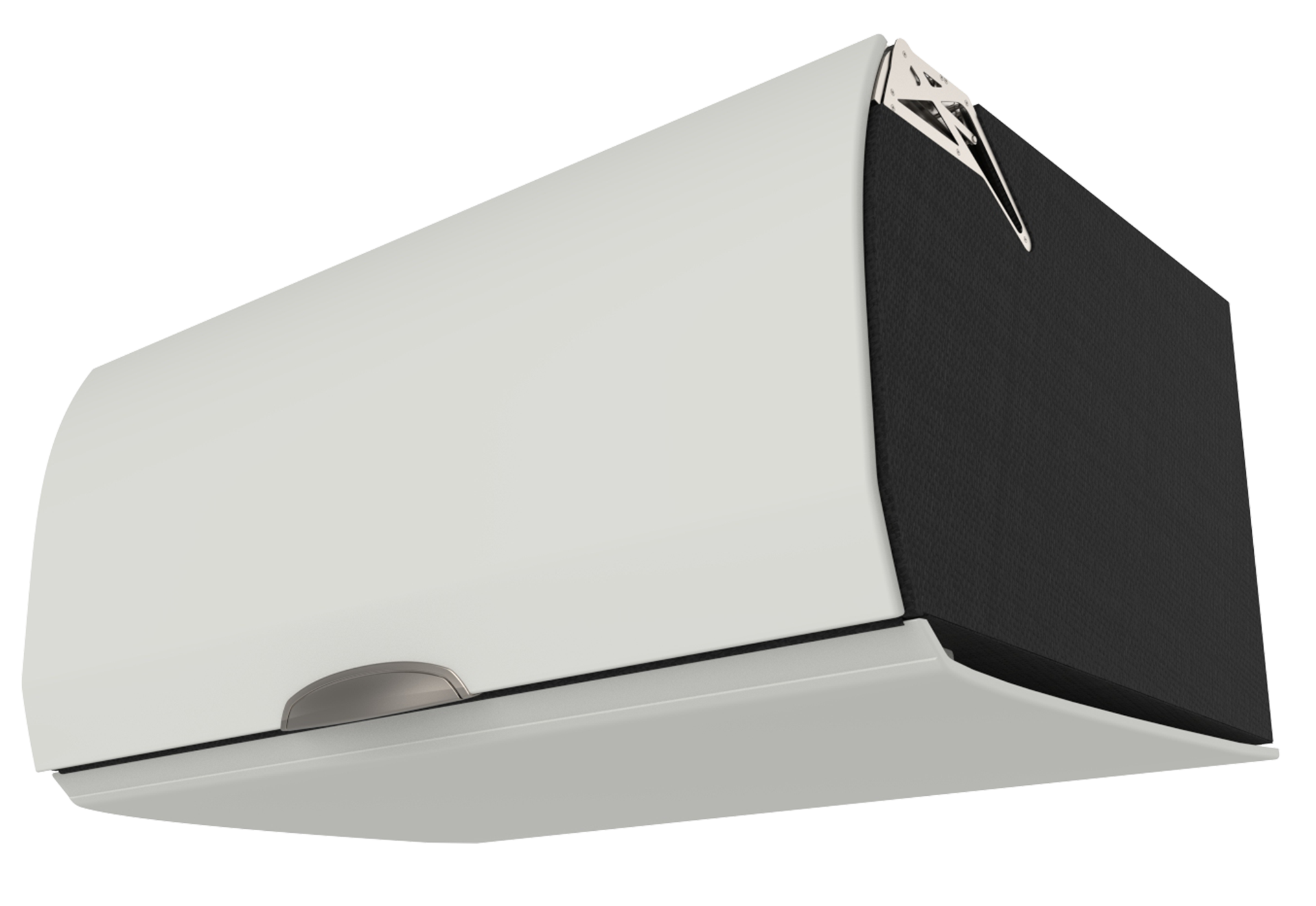

Lightweight construction solutions are essential for aviation. Every kilogram of weight saved reduces fuel consumption and thus emissions. This helps to achieve sustainability goals on the one hand and minimizes the consequences of rising CO₂ pricing on the other. Sandwich construction components are therefore often used in the cabin for elements such as luggage compartments or galley walls: thin, solid cover plates enclose a lightweight core. This enables robust yet very lightweight constructions. Currently, thermoset components with phenolic resin-based cover layers and a honeycomb core made of aramid paper dominate this market.
The thermoplastic sandwich molding technology developed at Fraunhofer IMWS opens up the possibility of using thermoplastics for such applications as well. Diehl Aviation Laupheim GmbH, Ensinger GmbH, ThermHex Waben GmbH, and Fraunhofer IMWS aim to provide evidence of this in the "STair" project by April 2027. "The advantages would be considerable: Thermoplastic systems can be processed much faster and with better energy and material efficiency. This is particularly relevant for the cabin, which is renewed several times during the life cycle of an aircraft. They are also recyclable and do not require environmentally harmful solvents," says Dr. Ralf Schlimper, who heads the subproject at Fraunhofer IMWS.
The targeted energy savings during processing are around 30 percent compared to the state of the art and the use of thermosetting plastics. Up to 80 percent of production waste should be directly reusable in semi-finished product manufacturing. Emissions from solvents during production are expected to be reduced by up to 80 percent.
To achieve these results, the thermoplastic sandwich molding technology must first be adapted to the processing of high-temperature-resistant thermoplastic sandwich structures (HT-TP sandwich) that are specially designed for the requirements of the aviation industry. The method is a highly efficient and automated one-shot process combining thermoforming and functionalization via injection molding. However, the corresponding process steps (forming, joining, and functionalization) must be further developed for the use of HT thermoplastics.
"We will examine various components from the cabin, first define requirements, and then develop and test the corresponding solutions for semi-finished products, sample materials, attractive appearance of the components, and forming and processing along various process routes. The goal is to establish a technology platform, also using simulation tools. The components should be no heavier than current thermoset solutions and meet all existing aviation requirements so that the results can be quickly transferred to the market. Last but not least, we are also looking at accompanying life cycle analyses and recycling concepts," says Schlimper.
At Fraunhofer IMWS, the focus is primarily on researching efficient thermoforming processes. HT semi-finished products (flat sandwich panels with a thermoplastic honeycomb or foam core and cover layers made of fiber-reinforced thermoplastics) are to be processed into 3D-formed components and component parts. To do this, they are first heated and then quickly transferred to the forming tool, which is to be developed in the project. There, 3D thermoforming takes place at temperatures of more than 200°C. In addition to the high temperature, the complex processing behavior poses a challenge. For the most part, the lightweight core is to be retained in the main area, while at the same time monolithic tapered areas are to be created at the edges of the components, which require the core to be completely melted and compressed. The project is also investigating hybrid sandwich structures with a combined core (e.g., honeycomb core for the most part and foam core in geometrically more complex component regions). This makes the processing methods and the investigation of material behavior even more complex.
"We have extensive prior knowledge of this process, including supporting modeling approaches, and the appropriate technical equipment. This enables us to systematically investigate aspects such as component geometry, edge and corner finishes, and interfaces to functional elements," says Schlimper. The institute also has excellent expertise and suitable methods for analyzing service and long-term behavior, such as strain measurements, morphological investigations with X-ray CT, and accelerated aging tests. In addition, the project team will explore the possibilities of material recycling, such as the properties of components containing recycled materials from cutting scraps.
If the project partners are successful, significantly more sustainable solutions for aircraft cabin components will become possible. "Our approach will enable emissions to be reduced considerably both during production and at the end of the life cycle, while at the same time meeting aesthetic and functional requirements," says Schlimper. "A major advantage here is that our collaboration covers all aspects of the value chain, from material production to component manufacturing. This promises good prospects for success."
Dr. Jochen Pflug, Managing Director of ThermHex Waben GmbH: "Step by step, we are transferring our recyclable lightweight thermoplastic honeycomb sandwich materials with 'STair' from the automotive to the aerospace industry. In doing so, we are successfully combining the opportunities for cost reduction and production automation with the necessary performance targets of the industry. I am thrilled and grateful for the opportunity to further develop our products together with strong partners."
(December 4, 2025)
![The images may be used free of charge for editorial purposes to report on this topic. Use for other purposes is only permitted with the prior consent of Fraunhofer IMWS. [ PNG 0.64 MB ]](/content/dam/imws/de/images/Kompetenzfelder/Kunststoffe/2025%2012%2004%20STair_Gepaeckfach%20Kabine.png)